Oxymoral PI Diweg-Pukanec at the renowned international conference „Shaping the Future“
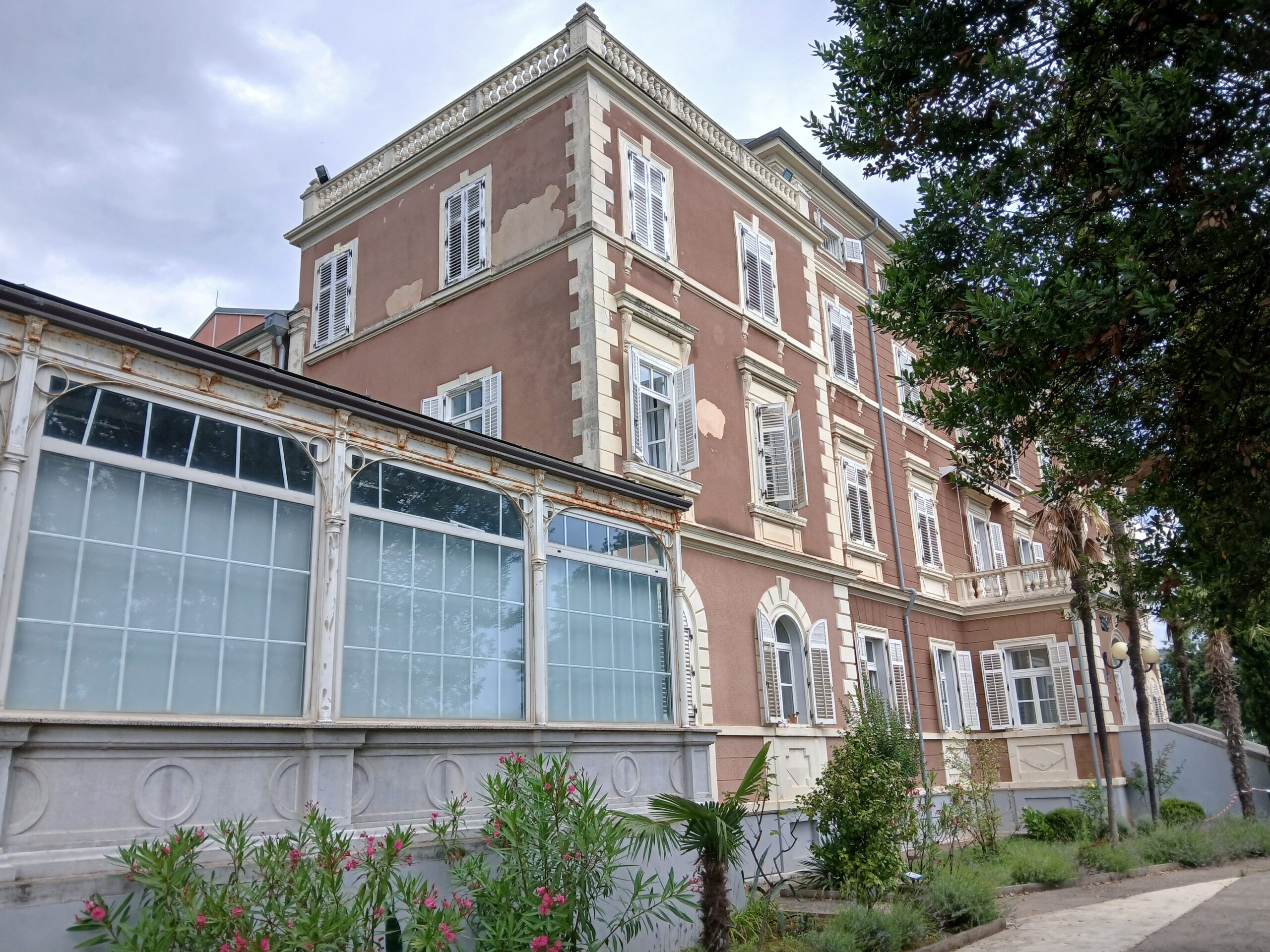
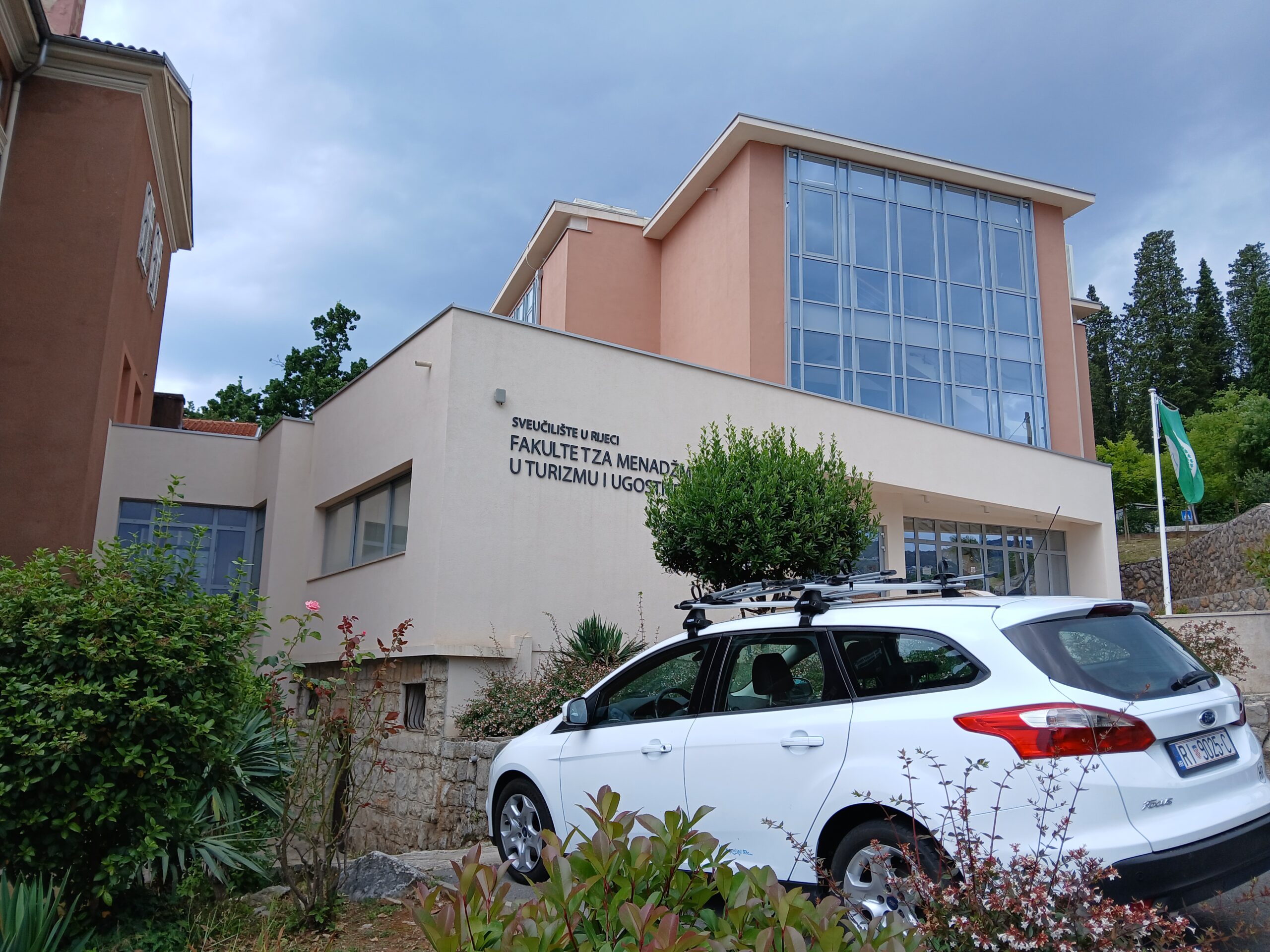
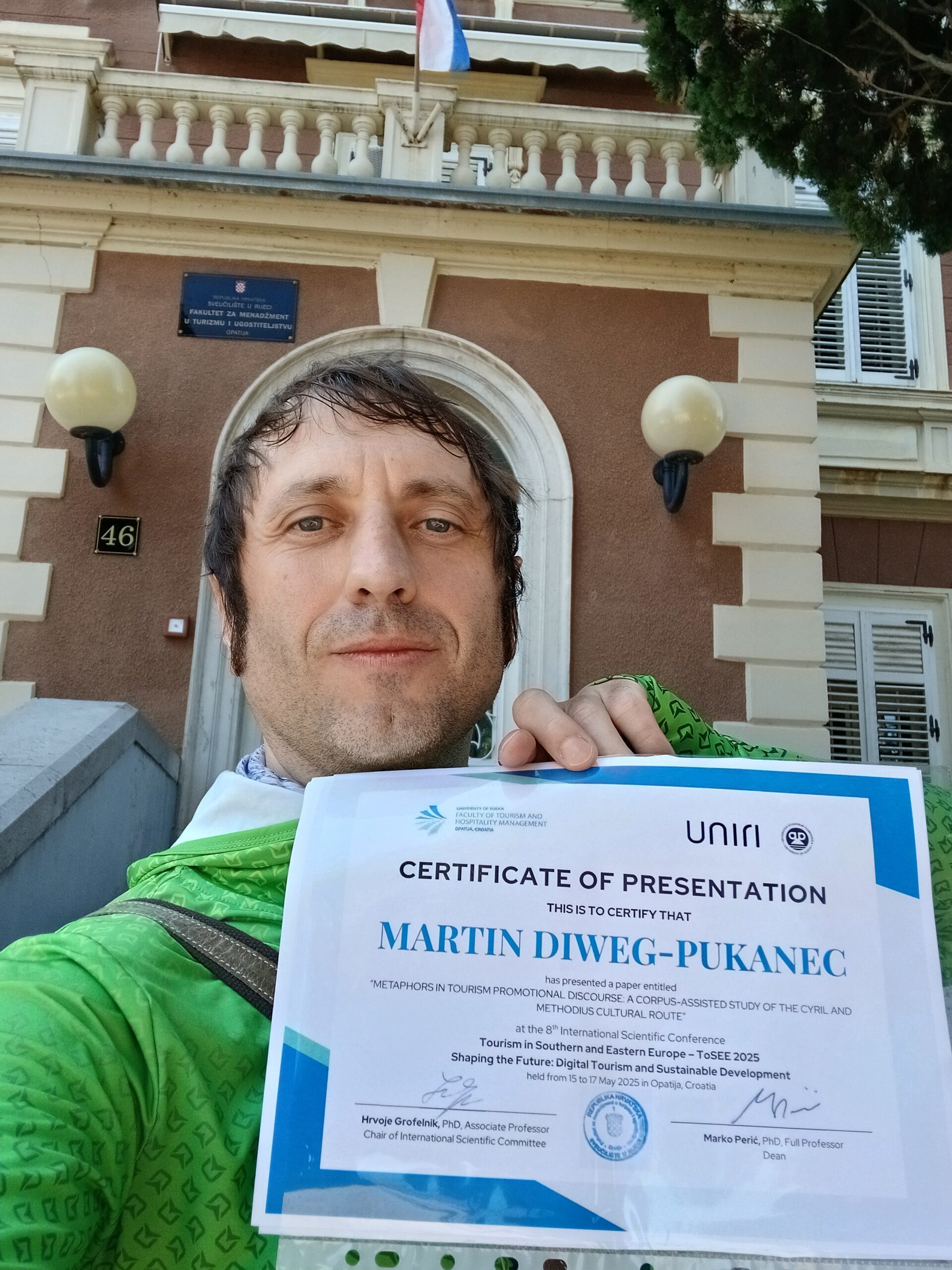
The 8th International Scientific Conference „Tourism in Southern and Eastern Europe“, hosted by the Faculty of Tourism and Hospitality Management in Opatija, University of Rijeka, Croatia, took place at the faculty from 15 to 17 May 2025. The ToSEE 2025 conference is a renowned multidisciplinary event that has a long history. This year’s theme, ‘Shaping the Future: Digital Tourism and Sustainable Development’, highlights the role of digitalisation in reshaping tourism practises including linguistic and semantic ones. Prof. Diweg-Pukanec presented at the conference the paper METAPHORS IN TOURISM PROMOTIONAL DISCOURSE: A CORPUS-ASSISTED STUDY OF THE CYRIL AND METHODIUS CULTURAL ROUTE, which was funded by the EU NextGenerationEU through the Recovery and Resilience Plan for Slovakia under the project No. 09I03-03-V04-00670 Inverted Morality: Reversed Semantics in Old Church Slavonic Moral Words (OXYMORAL).
Metaphors have long been recognised as powerful devices of persuasion, and thus there are many instances of metaphorical language in tourism promotional discourse. Diweg-Pukanec’s paper describes the use of metaphors or, more broadly, elements of figurative language on the official website of the Cyril and Methodius Route. The website provides good material for exploring Dann’s hypothesis that the greater the cultural distance, the more metaphors are used in descriptions of tourist places. However, the semantic research on the promotional materials of the Cyril and Methodius Route shows that the issue is more complex and ‘moral claim’ plays a major role in this area.
The methodological approach adopted in the paper tends to avoid any subjectivity of the research by using artificial intelligence in determining the figurative index of each text on the Cyril and Methodius Route website, which is the text corpus. By using this corpus linguistics approach, quantitative data is collected and interpreted from a cultural perspective. A textual analysis reveals some shortcomings in the use of metaphors when addressing potential tourists, as a large number of these devices can be observed especially in the case of locations with considerable cultural significance in national mythology, which is not necessarily legitimate. As far as such sites are concerned, it is apparently considered desirable to give these attractions a ‘moral claim’ on the tourist, which is an example worthy of emulation for other cultural locations.
Previous Conference Proceedings are indexed/referenced in:
- Clarivate Analytics – Web of Science Core Collection – Conference Proceedings Citation Index – Social Science & Humanities (2013, 2015, 2017, 2019 and 2021 editions)
- CABI Publishing
- EBSCO – Hospitality & Tourism Complete
- EconLit
- ProQuest – ABI/INFORM Global, ProQuest Central, ProQuest Central Essentials, ProQuest Central Student, ProQuest Central Basic (Korea) Research Library
Galéria