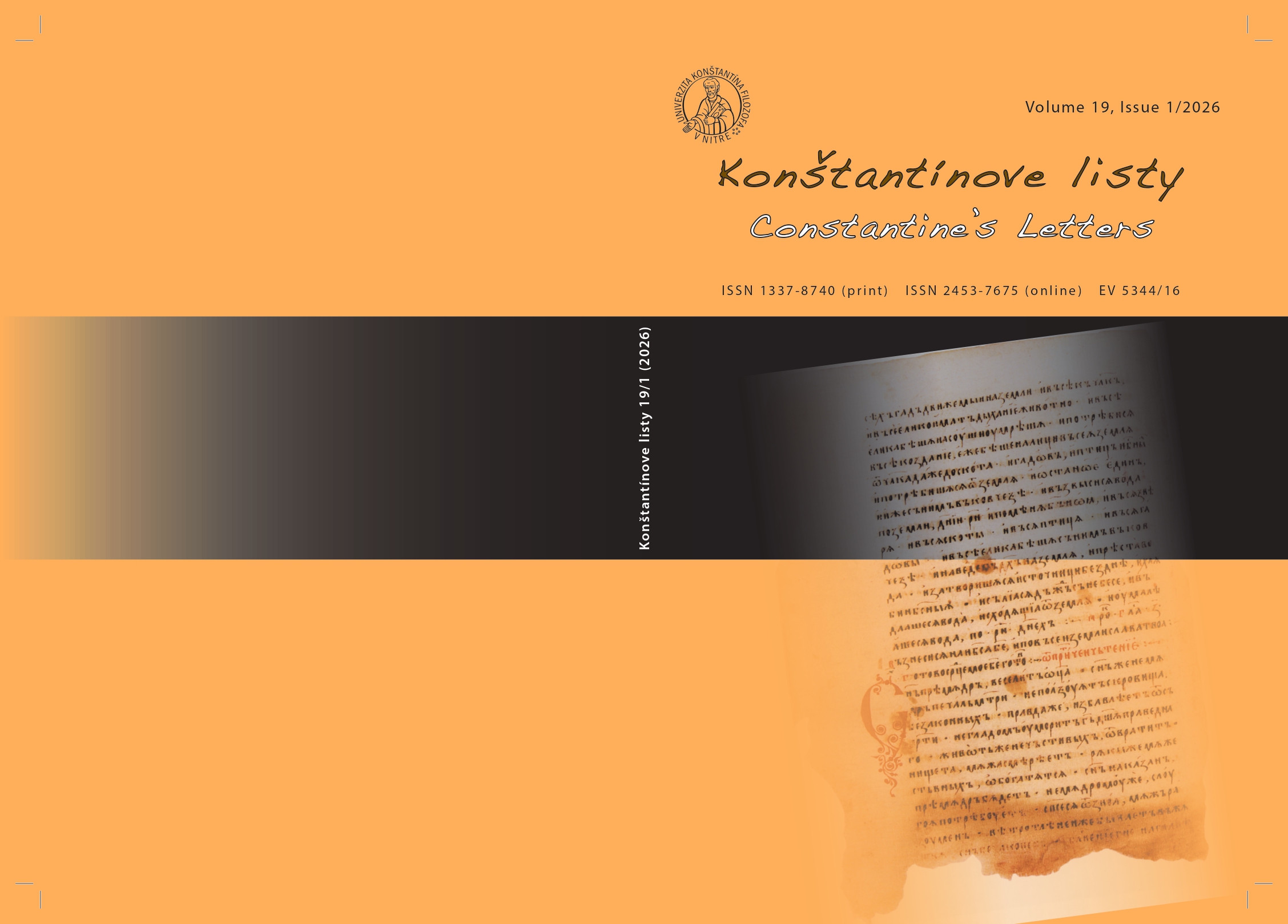
JUST PUBLISHED: M. Diweg-Pukanec, „Notes on the Semantic Development of Old Church Slavic študь and blagъ“
The aim of this paper in Constantine’s Letters (2026, Vol. 19, No. 1, pp. 3-10) is to to research enantiosemy concerning the Old Church Slavic words študь ‘manners’ and blagъ ‘good’ in Slavic languages. The original meanings of the word študь must have been related to ‘beat’. By the 15th century at the latest, the meaning changed to ‘modesty, chastity (acquired through training, discipline and beatings)’. The semantic change may have been associated with the significant religious movement of flagellants. Since the semantics of Old Church Slavic blagъ are quite rich, its original nature could be revealed by etymology. Proto-Slavic *bolgъ should be linked with Proto-Slavic comparative *boļьjь ‘bigger, better’ from Proto-Indo-European *bol-, *bel- ‘strong’. The church has preserved the positive meanings of the root. The negative connotations fully emerged in secular or non-church environments, at the latest in the 14th – 15th centuries, when the behaviour of yurodivy fanatics in Russia, also called blagy, began to be viewed negatively. The article is now indexed in the Web of Science.
The article was funded by the EU NextGenerationEU through the Recovery and Resilience Plan for Slovakia under the project No. 09I03-03-V04-00670 Inverted Morality: Reversed Semantics in Old Church Slavic Moral Words (OXYMORAL).
Galéria