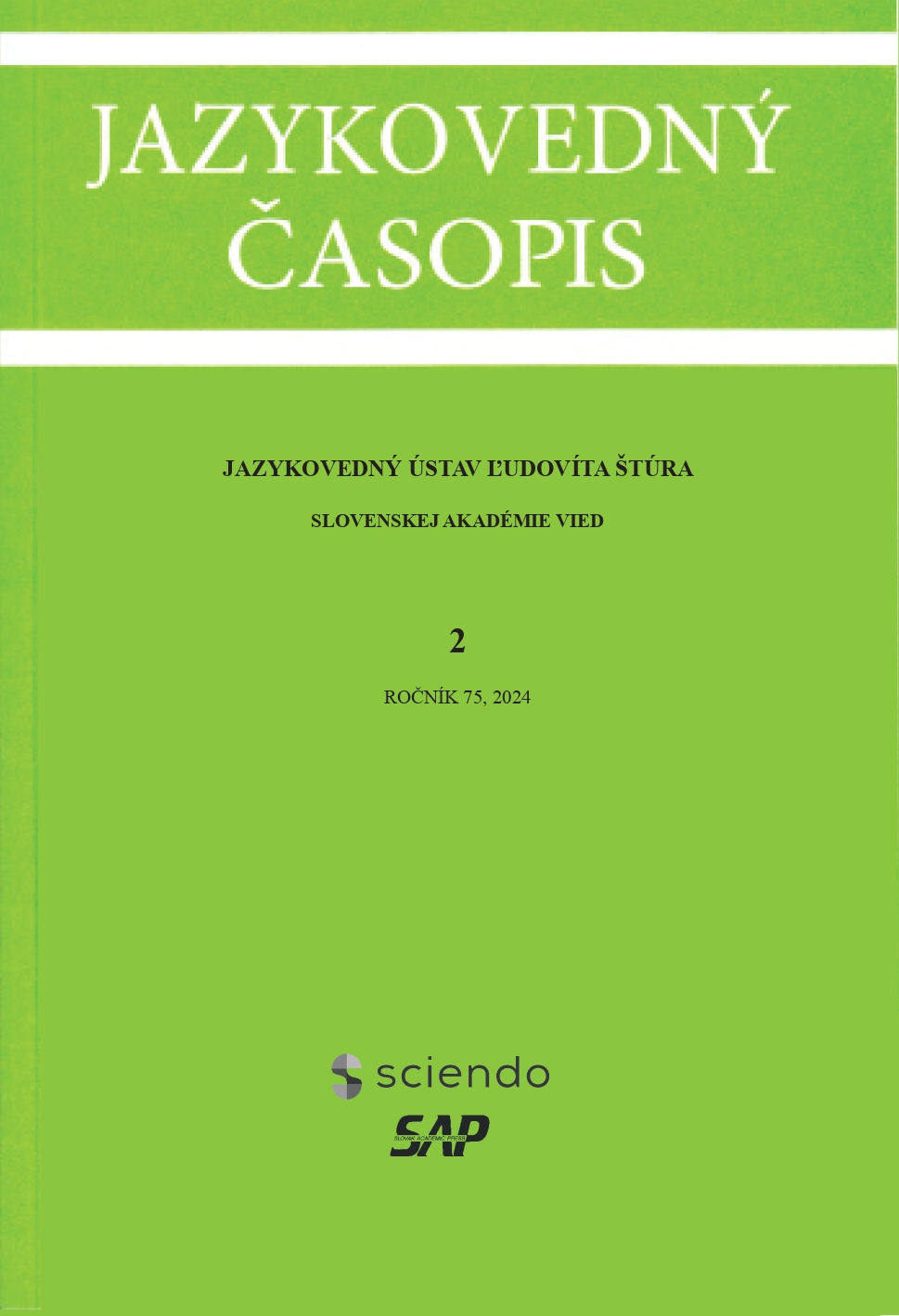
JUST PUBLISHED: M. Diweg-Pukanec, „Notes on the semantic development of Old Church Slavic nravъ and rovaniję“
The aim of the paper published in indexed Journal of Linguistics (2024, Vol. 75, No. 2, pp. 175-185) is to analyse Old Church Slavic nravъ ‘nature, character’ and rovaniję ‘gifts’. As the meanings of the words from Proto-Indo-European *(H)nōrH– point out, Proto-Slavic *norvъ, from which Old Church Slavic nravъ derives, had a semantics similar to that pervasive in Latin mōrōsus ‘hard to please’ or ‘qui suit son humeur, difficile, capricieux, chagrin’. In the Old Church Slavic period, however, the word nravъ ‘manner, custom’ had a neutral connotation, like Latin mōs ‘custom, usage’. As for the word-form rovaniję, it originated in a period when gifts and taxes were distinguished. Taxes were given (*da-nь ‘tax’, *da-rъ ‘gift’ < *da-ti ‘give’), offered first to pagan deities and then to the Christian God. They were also brought as (voluntary) gifts to Slavic princes. According to the etymology of rov-aniję < *rov-ati ‘to make a notch, cut; to determine the amount of a fee (tax/gift)’, nevertheless, they were written down (or prescribed) in the Old Church Slavic period in Great Moravia.
The article was funded by the EU NextGenerationEU through the Recovery and Resilience Plan for Slovakia under the project No. 09I03-03-V04-00670 Inverted Morality: Reversed Semantics in Old Church Slavonic Moral Words (OXYMORAL).
Galéria